

The continuous expansion of the Internet of Medical Things (IoMT) has transformed patient diagnostics, enabling real-time monitoring of physiological vitals such as electrocardiograms, blood oxygen saturation, glucose levels, and blood pressure. However, this influx of continuous telemetry has historically posed a massive architectural challenge: routing raw, highly identifiable health records to centralized cloud repositories introduces acute cybersecurity risks, regulatory liabilities, and severe network congestion.
A recent systematic review published in BMC Digital Health by Venkatesh J. and Viswanathan A. evaluates 69 peer-reviewed studies published between 2020 and 2026, revealing that federated learning (FL) resolves this fundamental conflict. By shifting analytical processing to decentralized edge devices and fog nodes, decentralized machine learning consistently maintains predictive diagnostic accuracies above 90 percent while reducing overall network communication overhead by up to 45 percent.
Eliminating Centralized Cloud Risks Through Local Model Computation
Traditional machine learning models rely on centralized aggregation, forcing medical facilities and wearable devices to upload granular patient telemetry across wide-area networks. This paradigm creates attractive single points of failure for ransomware syndicates, increases the likelihood of patient de-anonymization, and strains compliance with strict frameworks such as HIPAA and GDPR. In mission-critical environments, moving massive payloads of unencrypted physiological data outside the local perimeter is an unacceptable exposure vector.
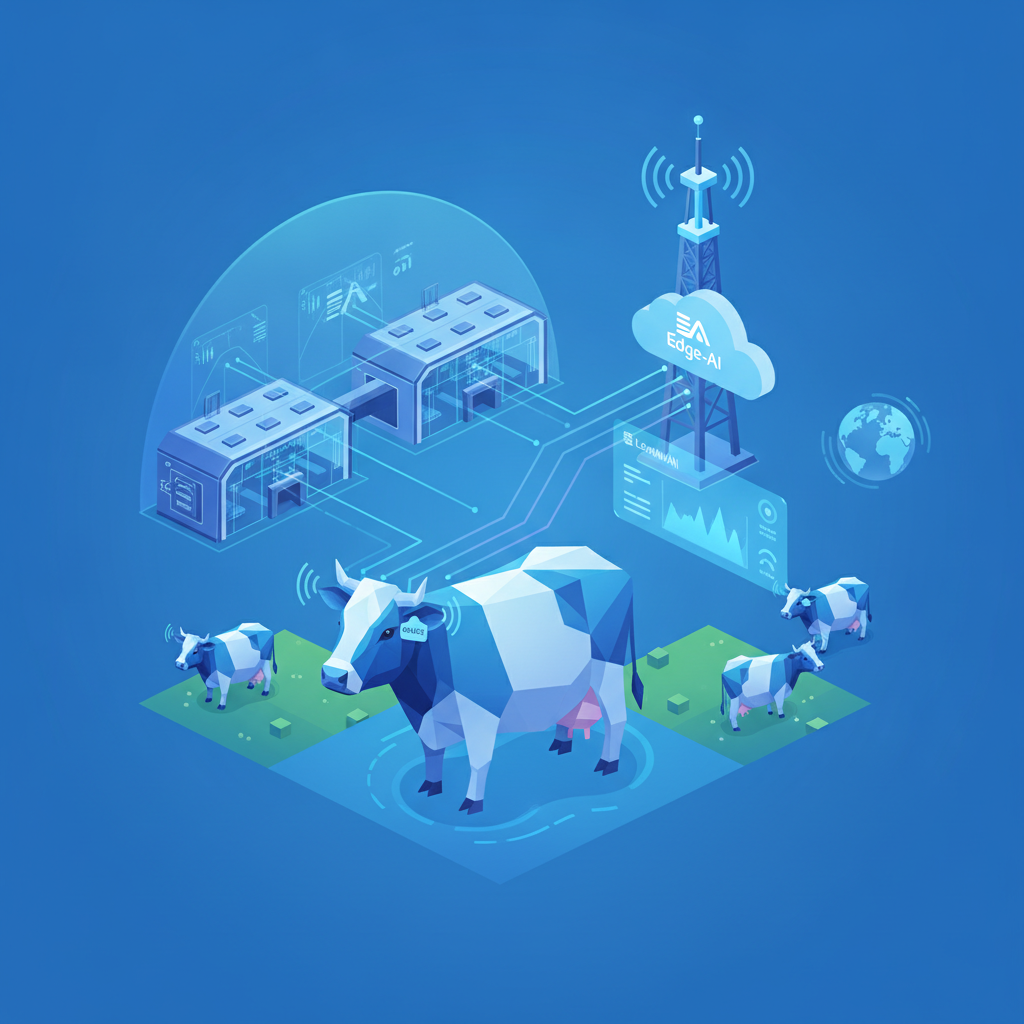
Federated learning completely flips this architecture by training algorithms directly on distributed end-user devices, medical gateways, and fog nodes. Instead of transmitting raw biometric streams, edge devices compute local model updates and exchange only encrypted mathematical weights and gradient parameters with a coordination server. The underlying sensitive patient data never traverses network boundaries, effectively nullifying primary exfiltration risks while preserving clinical-grade predictive capabilities.
Slashing Network Overhead and Latency via Distributed Edge Orchestration
Continuous transmission of high-frequency physiological data—particularly multi-lead ECGs and dynamic arterial metrics—rapidly saturates healthcare facility networks. The review establishes that distributed parameter sharing reduces communication costs by up to 45 percent compared to raw telemetry streaming. By transmitting compressed model updates rather than uninterrupted time-series data, federated networks preserve mission-critical WAN bandwidth for clinical workflows and urgent diagnostic alerts.
This architectural shift mirrors modern advancements in smart facility infrastructure. Just as clinical devices benefit from local edge processing, intelligent hospital campuses require edge-to-cloud architectures that normalize and process localized data without latency penalties. Enterprise platforms like BAaaS.io leverage this exact distributed paradigm within building automation, harmonizing disparate protocols—such as LoRaWAN environmental sensors and BACnet hospital HVAC systems—at the edge to maintain environmental precision and data privacy without congesting enterprise networks.
Zero-Trust Architecture: Aligning Clinical IoMT with Secure Operational Technology
The successful deployment of federated intelligence across healthcare facilities highlights the urgent necessity of Zero Trust architecture in operational technology (OT) and IoT networks. Exchanging encrypted parameter updates between fog layers prevents adversarial model poisoning and man-in-the-middle attacks. However, these clinical safeguards must be reinforced by identical cybersecurity standards across the hospital’s physical envelope, including surgical suite pressurization, biological containment, and pharmaceutical refrigeration.
Achieving total operational resilience requires modern, secure protocols that eliminate legacy vulnerabilities. Solutions like BAaaS.io extend this Zero Trust posture across facilities through native BACnet/SC (Secure Connect) with mutual PKI authentication, encrypted MQTT messaging, and secure LoRaWAN network integrations. By ensuring both clinical IoMT networks and critical HVAC environmental controls operate under robust cryptographic boundaries, healthcare operators protect sensitive microclimates and patient wellness simultaneously.
Conclusion
The transition toward federated learning marks a decisive turning point in digital health engineering, proving that patient privacy and high-accuracy predictive medicine do not have to be mutually exclusive. By decentralizing computation to local nodes, healthcare networks eliminate systemic cloud vulnerabilities while vastly optimizing operational bandwidth. Embracing this edge-first, Zero Trust methodology across both medical monitoring and underlying building automation infrastructure is the definitive blueprint for secure, resilient healthcare environments of the future.