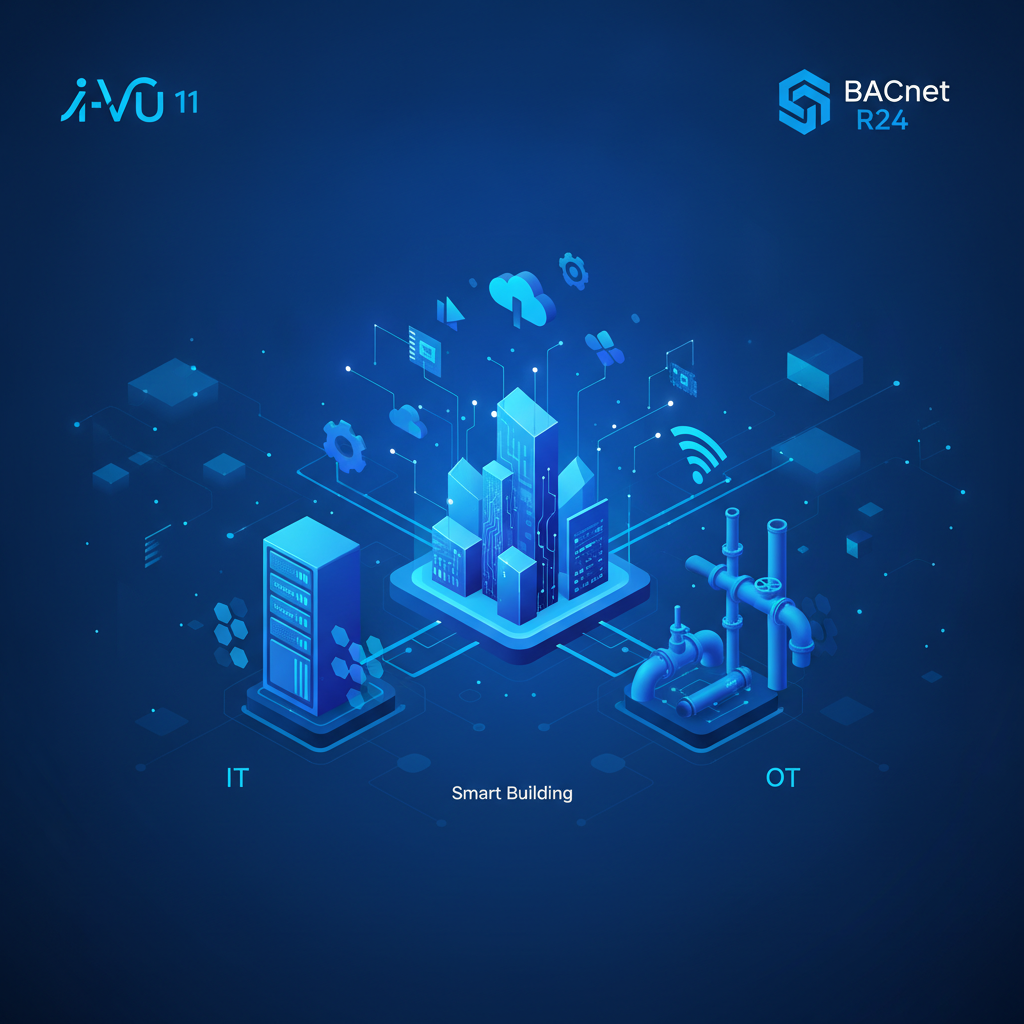

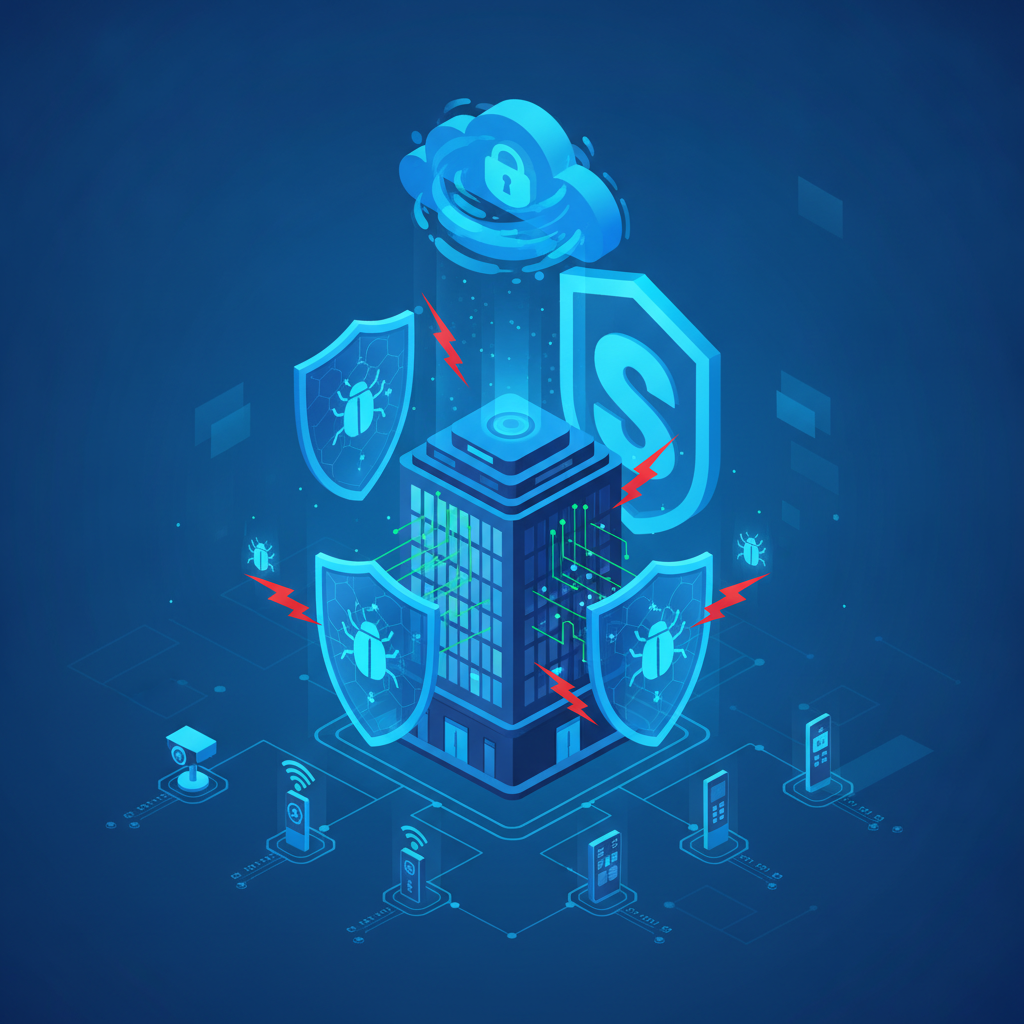
As commercial facilities and critical infrastructure increasingly rely on interconnected building automation, the attack surface for industrial control systems (ICS) continues to expand. A recent security advisory has brought this into sharp focus for facility managers and OT engineers.
Siemens has disclosed a critical vulnerability affecting its widely deployed Desigo DXR and PXC controllers. This flaw allows attackers to trigger a denial of service (DoS) condition via specifically crafted network traffic, highlighting the critical need for proactive ICS security in smart buildings.
Understanding the Malformed BACnet Threat
The vulnerability, tracked as CVE-2026-59693, targets the BACnet communication stack within Siemens Desigo edge controllers. Attackers can exploit this by sending malformed BACnet packets directly to the device network.
When the controller receives these anomalous packets, it fails to process them correctly, leading to a complete halt of the device’s communication and control processing capabilities. Affected models include the Desigo DXR2, PXC3, PXC4, PXC5 (E003 and E24), and PXC7 product lines.
Because BACnet is the standard protocol for interoperability in building automation, vulnerabilities within its packet handling are particularly dangerous. They can be exploited laterally if a malicious actor breaches the local operational technology (OT) network.
The Real-World Operational Impact
In a smart building environment, a DoS condition on a DXR or PXC controller is not just a digital hiccup—it creates immediate physical consequences. These devices manage critical HVAC operations, lighting schedules, and environmental telemetry.
If these controllers fail, buildings can quickly experience temperature fluctuations, loss of ventilation, and disruptions to automated environmental adjustments. For healthcare facilities or critical manufacturing plants, this loss of environmental control can halt core business operations.
Furthermore, the advisory notes that recovering from this exploit requires a manual reset or reboot of the affected device. In a large commercial property with hundreds of distributed controllers, this manual intervention represents a significant operational nightmare.
Executing Defense-in-Depth for Building Automation
To mitigate this risk, Siemens and CISA strongly recommend applying the latest firmware patches immediately. However, patching alone is rarely enough to secure complex industrial networks over the long term.
Organizations must adopt a defense-in-depth architecture. This involves minimizing network exposure by completely isolating control system networks from public internet access and corporate IT environments. Edge devices should always sit behind strictly configured firewalls.
When remote maintenance is required, engineers must rely on secure, updated Virtual Private Networks (VPNs). Yet, relying solely on VPNs can still leave internal device-to-device communications exposed if an endpoint is compromised.
Modernizing Security with Managed Infrastructure
Managing firmware updates, network isolation, and device health across a sprawling real estate portfolio is incredibly complex. This is where modern cloud ecosystems designed specifically for commercial buildings become invaluable.
Platforms like BAaaS.io streamline the service lifecycle by providing centralized control and real-time telemetry. By routing building management through a secure, unified network ecosystem, facility operators can rapidly detect offline controllers and orchestrate maintenance before occupants are impacted.
Moreover, BAaaS.io implements robust access control and continuous automated monitoring. This ensures that even if local hardware faces operational challenges, the overarching management system maintains security integrity and provides rapid incident response capabilities.
Conclusion
The Siemens Desigo BACnet vulnerability is a stark reminder that building automation systems are highly attractive targets for disruption. As our physical environments become increasingly digitized, bridging the gap between operational technology and cybersecurity is no longer optional.
Securing smart buildings requires a combination of rapid patch management, strict network segregation, and advanced management platforms. By treating ICS security as a foundational element of building architecture, operators can ensure their facilities remain resilient, comfortable, and protected against emerging threats.