
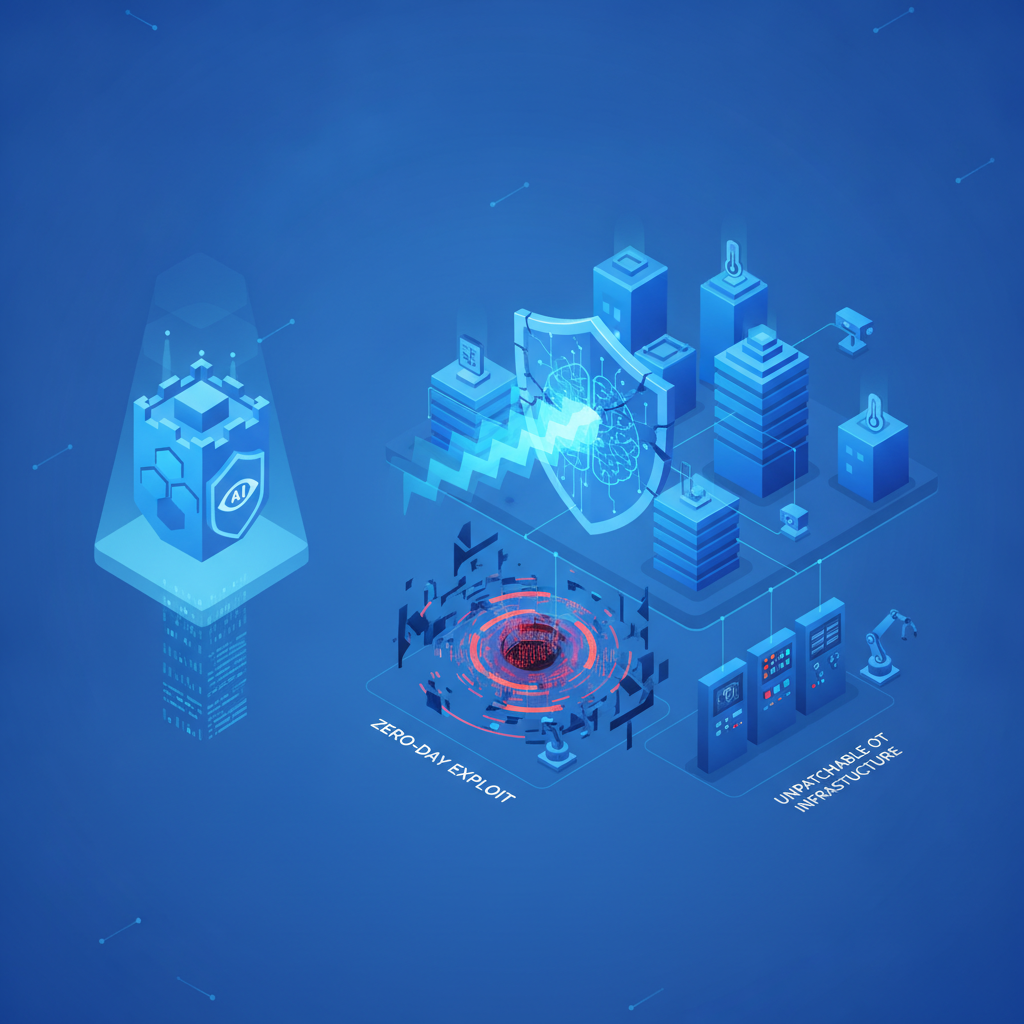
A breakthrough research initiative by cybersecurity firm Forescout has exposed an uncomfortable reality for operational technology (OT) and industrial control systems (ICS): artificial intelligence has radically compressed the timeline required to discover zero-day vulnerabilities in embedded software. By pairing commercial LLM models with automated dynamic validation, researchers uncovered 66 previously unknown vulnerabilities across 10 foundational TCP/IP stacks—tasks that historically required months of tedious manual reverse engineering completed in mere hours.
Among the hardest-hit environments are commercial smart buildings and industrial facilities. The vulnerabilities target networking components deployed in mission-critical hardware, including legacy Siemens APOGEE, TALON, and Desigo building automation controllers. Worse, while some controllers received firmware patches, manufacturers have designated several legacy product lines as end-of-support, leaving facilities managers with unpatchable “forever-day” vulnerabilities directly governing critical physical environments.
How Generative AI Slashed Vulnerability Research Timelines
The economics of vulnerability discovery in operational technology have permanently shifted. Forescout’s research methodology merged static binary and source code analysis with Anthropic’s Claude models, backed by automated dynamic emulation. The system executed its initial sweeps in roughly 10 hours, backed by 80 hours of dynamic validation, uncovering 99 total flaws (66 new, 33 rediscovered) at an LLM API compute cost of roughly $1,200 to $2,300.
To put this in perspective, comparable manual research during the landmark Project Memoria initiative required nearly nine months of elite human engineering time. While the AI-assisted pipeline had limitations—particularly around bespoke business-logic errors—it proved devastatingly effective at finding memory corruption and buffer management flaws within low-level communication stacks.
For building owners and systems integrators, this asymmetry represents a clear operational risk: threat actors now possess the automated toolsets required to rapidly identify exploitable vulnerabilities in legacy field hardware faster than vendors can issue advisories.
The Forever-Day Dilemma: Siemens APOGEE, TALON, and Desigo Exposure
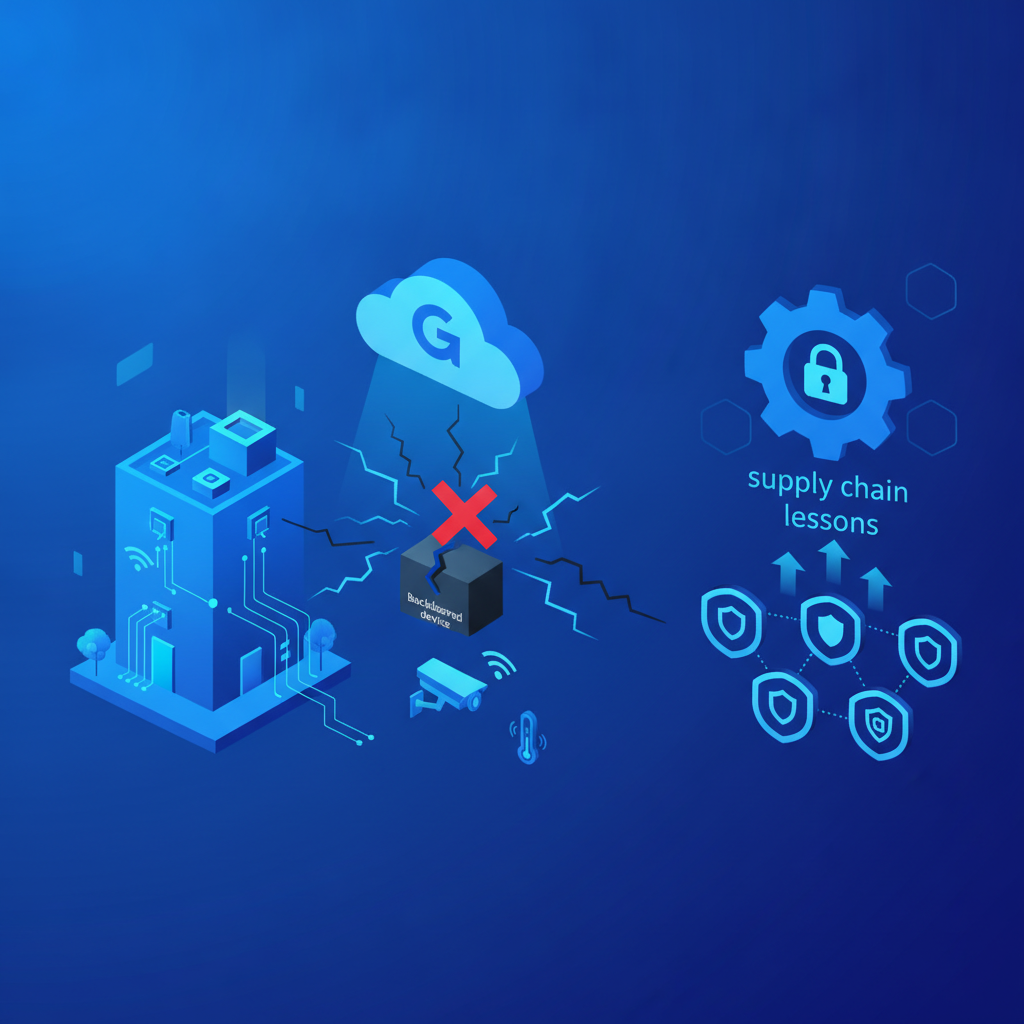
The practical fallout of this research is laid bare in Siemens’ corresponding security advisory. The uncovered flaws allow unauthenticated remote attackers to execute denial-of-service (DoS) attacks or read sensitive device memory over the network. While Siemens delivered firmware updates for newer APOGEE PXC and TALON variants, older workhorses—specifically APOGEE Modular Building Controllers (MBC), Modular Equipment Controllers (MEC), and certain Desigo automation stations—will receive no patches.
Replacing physical building automation controllers is vastly different from updating enterprise IT servers. Swapping out plant controllers across a multi-building campus or hospital involves significant capital expenditures, sensor rewiring, mechanical downtime, and weeks of recommissioning. Consequently, millions of legacy field devices operate indefinitely on unpatchable firmware.
Siemens advised facility operators to apply defensive mitigations: isolate vulnerable controllers behind strict network firewalls, disable exposed web and FTP management interfaces, and restrict protocol access. However, in legacy environments reliant on flat building networks and legacy unencrypted protocols, network segmentation alone often breaks legacy supervisory control systems.
MQTT and Embedded TCP/IP Stack Fragility: The lwIP Parsing Loop
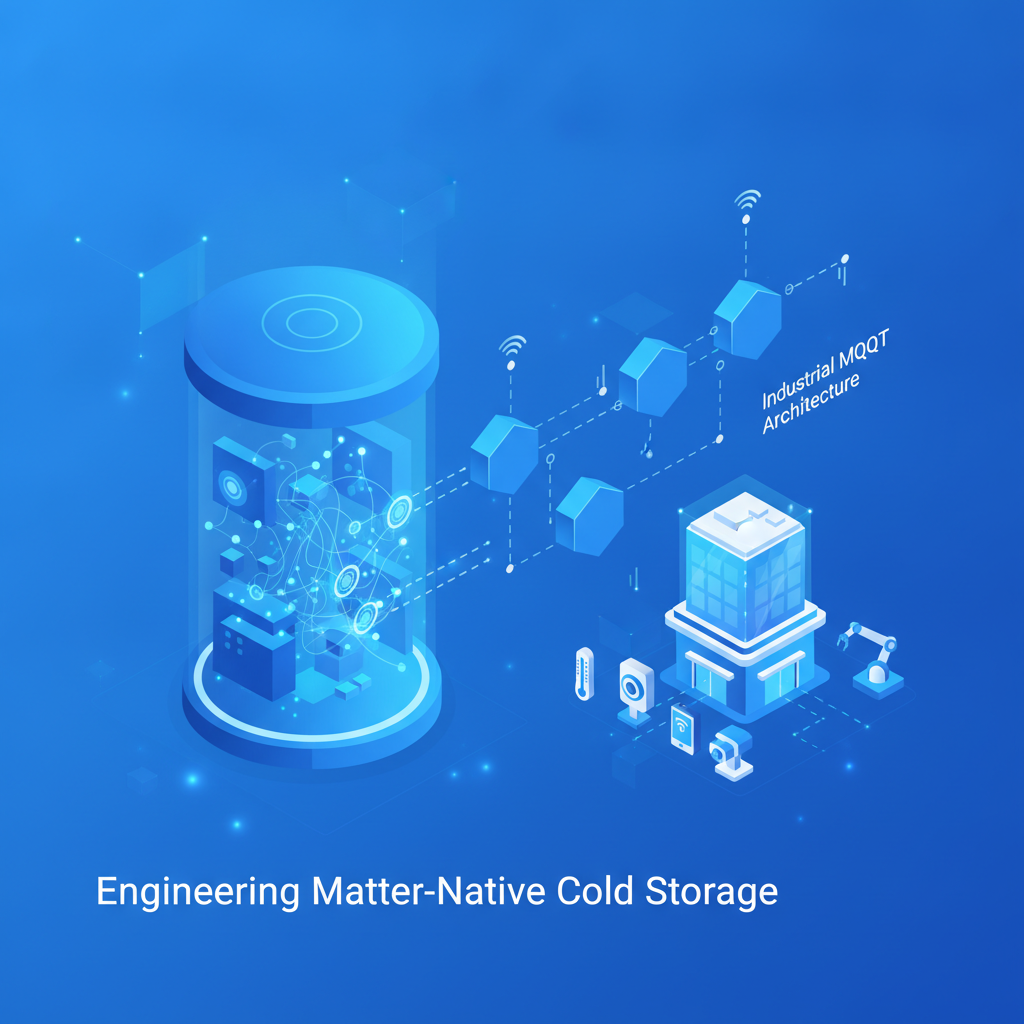
The research also revealed vulnerabilities in widely used open-source networking stacks like lwIP (lightweight IP), commonly embedded in IoT sensors, microcontrollers, and smart gateways. One critical flaw involved an infinite loop triggered during MQTT packet parsing under specific network buffer conditions. By transmitting a maliciously structured payload, an adversary or compromised message broker could freeze a field device’s entire network interface.
MQTT has become the standard for lightweight industrial IoT and cloud telemetry, but vulnerabilities inside the underlying embedded parsing engine undermine the reliability of the field layer. When an edge gateway or smart power meter locks up due to an unhandled MQTT framing error, upstream monitoring, automated demand response, and fault detection workflows instantly blind building operators.
Relying on embedded microcontrollers to directly manage unvalidated raw network sockets on untrusted or semi-trusted segments is an outmoded design pattern that modern facility architectures must abandon.
Architectural Immunity: Isolating Vulnerabilities with BAaaS.io
Mitigating AI-discovered zero-days requires eliminating the direct network exposure of legacy controllers altogether. This is where BAaaS.io provides an architectural breakthrough for modern facilities. Rather than relying on fragile on-premises supervisory servers and unencrypted flat field networks, BAaaS.io delivers a cloud-native Building Automation as a Service platform that decouples supervisory logic from physical field hardware vulnerabilities.
Operating on Microsoft Azure with an edge-to-cloud Zero Trust architecture, BAaaS.io normalizes and secures building telemetry across all six major automation protocols: BACnet (including native Zero Trust BACnet/SC), Modbus, LonWorks, KNX, LoRaWAN, and MQTT (Sparkplug B and JSON). By deploying containerized, hardened edge runtimes, BAaaS.io ingests telemetry locally, strips away malicious packet vectors, and terminates unencrypted communications at a controlled edge boundary.
Unpatchable controllers—such as legacy Siemens APOGEE or Desigo units—are quarantined behind cryptographically signed, outbound-only connections. This eliminates the risk of an unauthenticated remote attacker accessing vulnerable embedded TCP/IP stacks or exploiting lwIP MQTT parsing flaws, allowing enterprise operators to unify, monitor, and optimize their multi-vendor facilities without costly rip-and-replace infrastructure projects.
Conclusion
Forescout’s findings mark a permanent turning point in smart building cybersecurity: the speed of vulnerability discovery has outpaced the physical realities of OT hardware patching. When critical automation controllers cannot be updated, defensive strategies must shift from reactive patching to zero-trust structural isolation.
Building owners and OT engineers can no longer depend on legacy perimeter firewalls to shield unpatchable assets. By embracing cloud-native supervisory architectures like BAaaS.io, organizations can insulate their physical plants from network-level zero-days, ensuring resilience, continuous operational visibility, and tenant safety in an era of automated cyber threats.