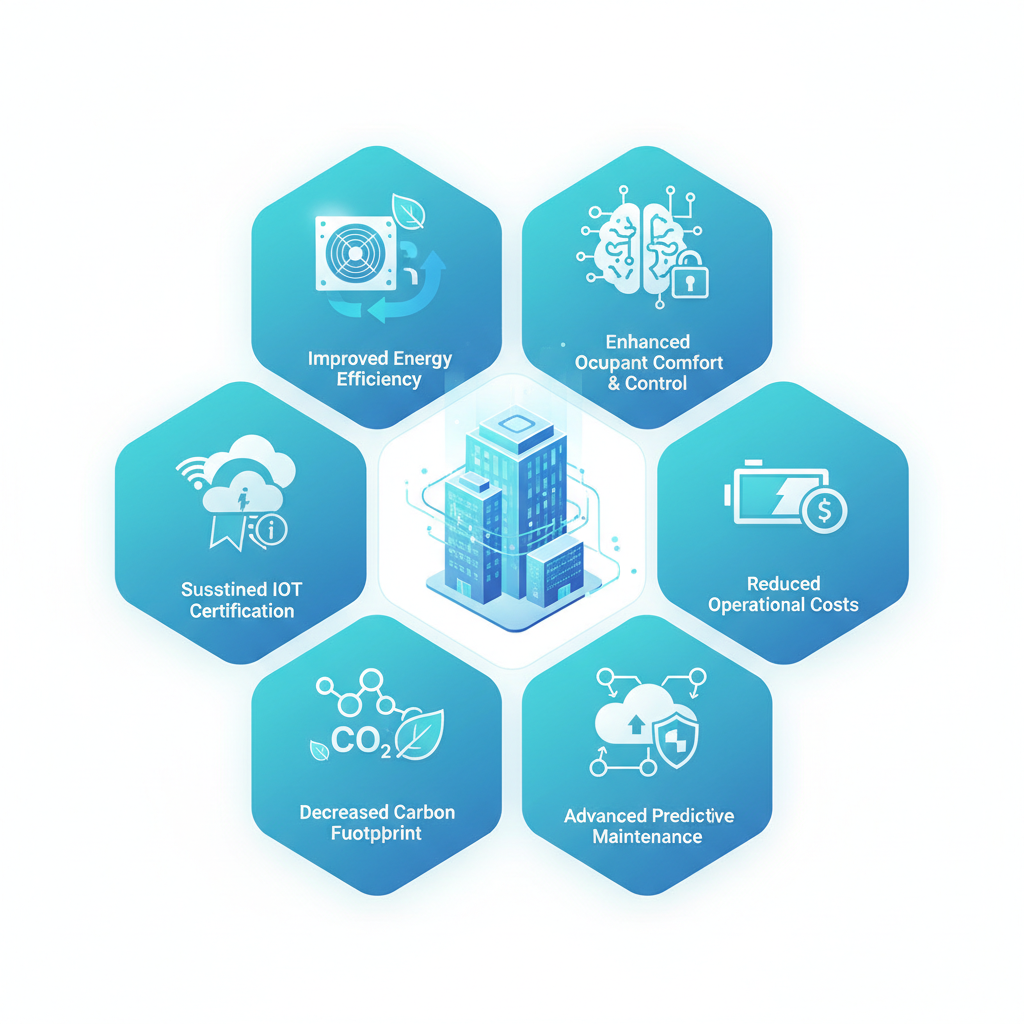
Sustainable buildings are no longer an ambition for the future; they are the new baseline. As energy codes tighten and green certifications like LEED, BREEAM, and WELL become standard in commercial real estate, the performance of HVAC systems is under more scrutiny than ever. With HVAC commonly responsible for 30–40% of a building’s total energy use, even targeted, component-level upgrades can dramatically shift both operating costs and sustainability metrics.
One of the most overlooked yet high-impact levers is induction unit replacement. Modern, high-efficiency induction units can transform an aging building into a more energy-efficient, comfortable, and smart-enabled asset—while supporting energy certification goals and long-term asset value. This article unpacks the top reasons why prioritizing induction unit replacement is rapidly becoming a strategic must for forward-thinking building owners and operators.
1. Cutting HVAC Energy Use Without Sacrificing Comfort
Modern induction units are engineered to deliver the same—or better—cooling and comfort levels with significantly lower energy demand. Manufacturers have refined airflow paths, pressure relationships, and heat transfer surfaces so that less fan power and pump energy are required to achieve the same thermal results. Over time, this translates into substantial reductions in electricity consumption and peak demand charges, especially in large commercial portfolios.
For energy-certified and high-performance buildings, this matters directly to their energy use intensity (EUI) and operational carbon footprint. Because induction units operate continuously in many office, hotel, and institutional applications, even single-digit percentage efficiency gains compound quickly into noticeable monthly savings. When retrofits are scoped portfolio-wide, the financial and sustainability impact becomes even more pronounced.
From an occupant perspective, these efficiency gains do not come at the expense of comfort. High-efficiency coils, better nozzling, and optimized primary air control help maintain stable temperatures and good air mixing while the mechanical systems operate at lower power levels. This combination of comfort and efficiency is exactly what energy certification frameworks are designed to reward.
2. Advancing LEED and Green Building Certification Goals
Induction unit replacement is a highly effective tool for moving an existing building closer to LEED, BREEAM, or other energy certification targets. HVAC performance directly influences multiple credit categories, including energy performance, indoor environmental quality, and sometimes even thermal and acoustic comfort. In many retrofit projects, upgrading induction units alone can materially improve a building’s energy performance score and compliance with local energy codes.
Newer induction units typically improve sensible and latent cooling performance while enhancing ventilation efficiency. Better air mixing helps the building meet or exceed ASHRAE 62.1 ventilation standards without over-ventilating, which can otherwise drive up energy use. This balance of fresh air and energy efficiency supports key certification criteria around both sustainability and occupant health.
Because induction unit replacement is a systems-level optimization rather than a purely architectural intervention, it can be executed with far less disruption than major envelope upgrades. For owners hoping to raise their certification level within an existing shell, targeting HVAC terminal units can be a highly cost-effective path to improved scores and compliance with tightening environmental regulations.
3. Reducing Maintenance Risk and Lifecycle Costs
Older induction units are often a hidden source of maintenance risk and operational unpredictability. As components age, valves stick, coils foul, nozzles degrade, and small performance issues accumulate into recurring comfort complaints and service calls. This not only increases maintenance spend, it also introduces operational risk and tenant dissatisfaction when comfort becomes inconsistent.
Modern induction units are typically designed with fewer mechanical complexities, better materials, and improved corrosion resistance. This reduces the frequency of unplanned interventions and extends the useful life of the equipment. When combined with modern building automation and real-time monitoring, facility teams can move from reactive troubleshooting to proactive maintenance planning.
Early recognition of failure modes—such as degraded airflow, temperature drift, or unusual noise—becomes easier when units are standardized, instrumented, and integrated. This reduces the risk of full system downtime, helps stabilize OPEX, and supports more predictable lifecycle budgeting, which is particularly important for energy-certified assets subject to long-term performance commitments.
4. Delivering More Even Temperatures and Healthier Air
Outdated induction units often struggle with uneven air distribution. The result is familiar: hot and cold spots, stagnant pockets, and zones with poor ventilation. This inconsistent performance not only affects comfort; it can also undermine indoor air quality (IAQ), occupant well-being, and productivity—factors increasingly monitored in smart buildings and green certifications.
High-efficiency, modern induction units are designed to mix primary (fresh) air with room air more effectively, stabilizing temperatures and improving overall air circulation. Occupants experience fewer drafty zones, more uniform temperature profiles across open-plan offices, and more reliable humidity control. This improved thermal and IAQ performance is especially valuable in energy-certified buildings, where comfort metrics are part of the value proposition.
From a business standpoint, better comfort translates into fewer occupant complaints, reduced churn for commercial tenants, and stronger differentiation in competitive office and hospitality markets. For sectors like hotels, healthcare, and higher education, the perceived quality of indoor environments directly influences customer satisfaction, staff performance, and brand reputation.
5. Quieter Spaces and Better Occupant Experience
Noise is a persistent but often underappreciated issue in legacy HVAC systems. Older induction units can generate noticeable noise through turbulent airflow, higher operating pressures, and mechanical wear. Over time, this becomes part of the background environment—but it interferes with focus, speech intelligibility, and overall occupant satisfaction.
Modern induction units leverage improved aerodynamics, lower pressure drops, and refined diffuser designs to significantly reduce sound levels. The result is quieter operation during both heating and cooling modes, even at higher load conditions. In open-plan offices, this supports concentration and reduces noise fatigue; in meeting rooms, it enhances communication; and in hotels, it improves sleep quality and guest ratings.
From the perspective of building automation and ICS security, quieter, more predictable operation also means fewer false alarms and less confusion about what is “normal” behavior. When acoustic signatures are stable and well understood, it becomes easier to detect true anomalies in system performance and respond appropriately.
6. Enabling Smart, BACnet-Ready and IoT-Integrated Buildings
One of the biggest shifts in modern building automation is the move from static, schedule-based control to dynamic, data-driven operation. Modern induction units are increasingly designed to integrate with building management systems (BMS), BACnet networks, and cloud-based IoT platforms. This transforms the HVAC system from a passive utility into an active, responsive component of the smart building ecosystem.
With BACnet-compatible and IoT-enabled induction units, operators can monitor real-time performance, adjust airflow based on occupancy, and trigger proactive maintenance workflows. For example, airflow and temperature data can be correlated with occupancy sensors to reduce airflow to unoccupied spaces, or to pre-condition meeting rooms ahead of scheduled events. This level of control directly supports energy optimization, comfort, and ESG reporting requirements.
Cloud-native platforms like BAaaS.io can further amplify these capabilities by providing a centralized environment to collect telemetry from induction units, VAVs, chillers, and other field devices. Through BAaaS.io, building owners can visualize performance trends, automate setpoint optimization, and enforce ICS security best practices across their portfolio, ensuring that new high-efficiency induction units operate safely, securely, and as designed.
7. Minimizing Retrofit Disruption and Aligning With Modern Layouts
Many existing commercial buildings have undergone multiple interior renovations without corresponding updates to their HVAC terminal units. The result is a mismatch between current floor layouts, occupancy patterns, and the original induction system design. This can limit flexibility for tenants and complicate comfort control, particularly in co-working, agile office, and mixed-use spaces.
Modern induction units are typically designed with retrofit practicality in mind: compact form factors, configurable nozzling, and adaptable connection points. This makes it possible to upgrade units within existing ceiling cavities and riser constraints, reducing the need for invasive wall demolition or ductwork reconfiguration. For occupied buildings, this minimizes disruption and downtime, making projects easier to phase and schedule.
Specialist partners such as EB Air Control bring additional value by combining equipment supply with advanced assessment methods. Their retrofit approach focuses on identifying real energy losses, validating airflow and pressure relationships, and phasing works to minimize operational disturbance. When integrated into a wider building automation strategy—potentially orchestrated via platforms like BAaaS.io—these upgrades become part of a coherent roadmap rather than a one-off project.
When to Plan Induction Unit Replacement
Building owners often delay induction unit replacement until problems become unavoidable—rising complaints, frequent service calls, or visible failures. By that stage, energy losses and operational disruptions have usually accumulated for years. A more strategic approach is to evaluate replacement when units reach 10–15 years of service, especially if energy bills are climbing, temperature consistency is degrading, or you are planning broader sustainability or certification upgrades.
Key triggers include increasing comfort complaints, unbalanced zones, unexplained energy use spikes, and difficulty sourcing spare parts. If your building automation data shows chronic reheat, excessive fan runtimes, or persistent zone overrides, it is likely that terminal performance is no longer aligned with building needs. In energy-certified or ESG-focused portfolios, aligning induction unit replacement with capital planning cycles allows you to lock in efficiency gains while meeting regulatory and investor expectations.
Pairing hardware replacement with a modern BMS and a secure, cloud-enabled platform like BAaaS.io ensures that new units do not just perform better mechanically, but also become part of a measurable, auditable strategy for energy, comfort, and ICS security compliance.
Conclusion
Induction unit replacement is far more than a mechanical upgrade; it is a strategic lever for transforming how a building uses energy, delivers comfort, and participates in the broader smart building ecosystem. By targeting one of the most critical components of the HVAC system, owners can reduce energy consumption, stabilize maintenance costs, enhance indoor environmental quality, and support LEED and other certification goals with minimal disruption.
As energy prices rise and environmental regulations tighten, continuing to operate aging induction units becomes an increasingly expensive and risky choice. Replacing them with high-efficiency, BACnet-ready, IoT-integrated units—and managing them through platforms like BAaaS.io—positions buildings to meet both current and future performance expectations. For organizations committed to sustainable, smart, and resilient facilities, prioritizing induction unit replacement is not just good engineering; it is sound long-term business strategy.