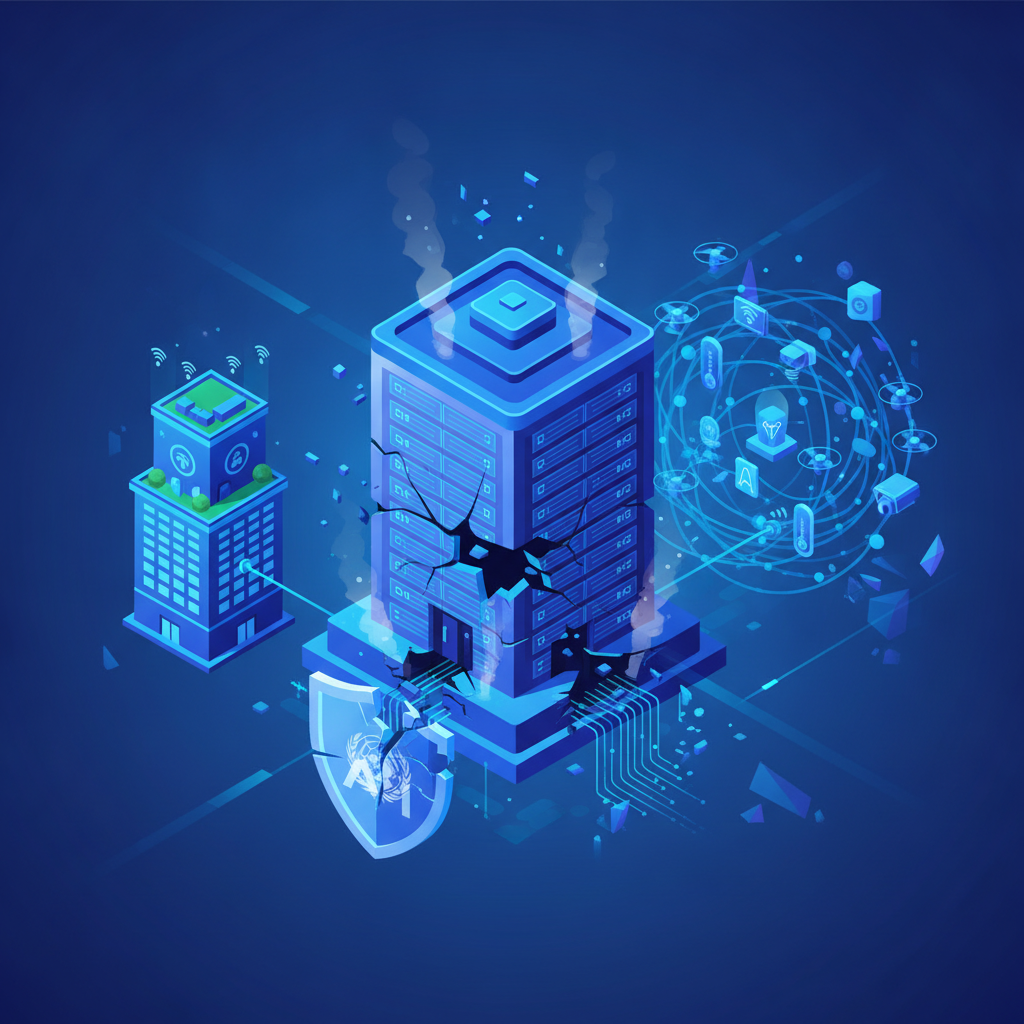
Skyrocketing artificial intelligence workloads are pushing global data center infrastructure to its absolute limits. As computing demand outpaces available power and cooling supply, the operational strain is no longer just an engineering problem—it is a global sustainability crisis.
Facilities currently draw more electricity than almost any nation, prompting the United Nations to introduce a severe environmental transparency initiative. For facility operators and building automation architects, this UN mandate signals a permanent shift: environmental disclosure has graduated from a reputational footnote to a core metric of commercial survival.
Regulatory Convergence and the Boardroom Mandate
The UN’s new initiative demands that major AI developers track and report carbon emissions, water consumption, and land use, with a target of 100% renewable energy by 2030. When data center water usage threatens to rival the basic needs of 1.3 billion people, regulatory scrutiny is inevitable.
We are already seeing this policy convergence across global markets. The European Union has mandated strict reporting and waste-heat reuse, while Germany requires a Power Usage Effectiveness (PUE) below 1.2. Similarly, Hong Kong has slashed its mandatory building energy audit intervals in half.
These policies fundamentally change the risk matrix. Compliance is no longer a localized checklist; it is a unified global pressure forcing operators to weigh energy costs, outage risks, and operational licenses simultaneously.
Soaring Rack Densities and the Financial Weight of Outages
Cost management is now the dominant operational priority, with energy prices surging over 20% year-on-year and cooling systems absorbing up to 40% of facility power. As new AI servers demand 132 kilowatts per rack—and future systems target an astonishing 240 kilowatts—legacy cooling designs are fundamentally outmatched.
Holding thermal stability at these extreme densities is incredibly difficult. Thermal faults now drive 15% of root-cause disruptions, costing facilities upwards of $530,000 per incident. Meanwhile, power-related faults tied to uninterruptible power supplies (UPS) trigger losses exceeding $748,000.
The Need for Predictive Oversight
Condition-based oversight is critical to mitigating these financial exposures. Relying on reactive alarms is no longer viable when dealing with next-generation AI workloads. Facilities must adopt predictive strategies to prevent thermal runways before they cause catastrophic IT failure.
Bridging the IT-OT Divide with Unified Building Automation
A major blind spot in legacy data centers is the disconnect between the IT workloads generating heat and the building automation systems tasked with removing it. True operational visibility requires normalizing data across mixed estates, bridging facility protocols like BACnet, Modbus, and SNMP while enforcing stringent ICS security.
This is where modern cloud ecosystems become invaluable for both mission-critical data centers and large-scale smart buildings. By migrating siloed infrastructure into a unified architecture, operators can deploy an integrated building information sphere that bridges the IT-OT gap.
Platforms like BAaaS.io provide centralized control and real-time telemetry, allowing facilities to automate environmental adjustments based on precise, live data. Leveraging this ecosystem enables proactive maintenance and dynamic energy efficiency optimization—drastically reducing the facility’s carbon footprint while safeguarding uptime.
Advisory-First AI and Human-in-the-Loop Control
To hit aggressive renewable energy targets and cut energy consumption by the estimated 30% that AI-driven optimization promises, operators must adopt intelligent workload management. However, full automation in mission-critical infrastructure carries inherent operational risks.
Credible optimization relies on an advisory-first design model. In this framework, artificial intelligence systems provide data-backed recommendations that pass rigorous uncertainty checks against operator-defined limits. Human operators maintain full supervisory control and can override automated modes at any moment.
This structured approach respects hard limits while leveraging the predictive capabilities of machine learning. It provides a measured route to reconciling the dual obligations of rising power densities and strict environmental commitments without compromising facility resilience.
Conclusion
The distance between data centers that manage infrastructure reactively and those that embrace predictive, condition-based automation is rapidly widening. Driven by UN mandates, soaring energy costs, and relentless AI computing demands, the industry is at a critical inflection point.
Future-proofing critical infrastructure requires more than just installing efficient chillers; it demands holistic data integration, advisory-first AI optimization, and strict operational discipline. Facilities that successfully bridge the gap between IT workloads and environmental controls will not only meet regulatory compliance but will secure their commercial viability for the next decade.